
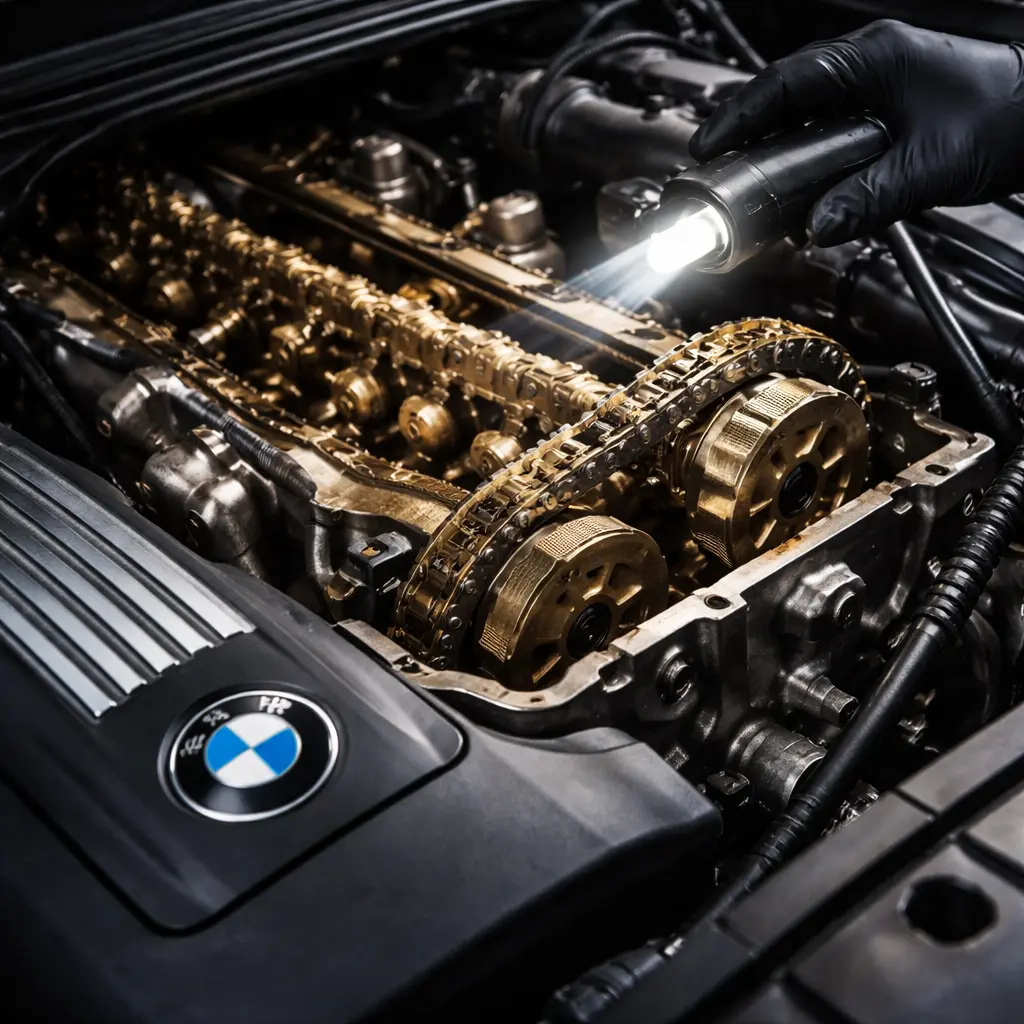
At Motorsport Connections, we’ve been diagnosing and repairing BMWs in Winston-Salem, NC since 1989. Our shop specializes in BMW and Mini Cooper vehicles, and we use factory-level tools and proven processes to catch problems early, before they turn into major repairs.
One of the most common issues we diagnose on modern BMW engines is a brief rattle on cold start, especially on vehicles equipped with the N20 engine found in models like the F30 3 Series, X3, and X1. Many drivers come to us after noticing the noise but aren’t sure if it’s serious. In our experience, it usually is—and catching it early can save thousands.
What That Cold Start Rattle Actually Means (N20 Timing Chain Issues)
Most drivers notice a metallic rattle that lasts one to three seconds on a cold start. The noise typically disappears once the engine warms up, which is why it is often dismissed. In some cases, there may also be a check engine light or a slightly rough idle.
One of the most common patterns we hear from customers is that it only happens in the morning. That detail is important because it points directly to how the timing system behaves when oil pressure is low.
The BMW N20 engine uses a timing chain system with guides and a tensioner that can wear prematurely. Over time, the chain develops slack, especially after the vehicle has been sitting and oil has drained away from critical components. When the engine starts, there is a brief moment where the chain is not fully tensioned.
That startup rattle is the timing chain losing proper tension. In our experience, if this condition continues, the chain can stretch or even jump timing. When that happens, it can lead to valve damage or complete engine failure. This is why proper BMW diagnostics is critical when early symptoms appear.
If you are hearing this noise consistently or it is getting louder, it is a strong indication that the problem is progressing and should be inspected as soon as possible.
Which BMW Models Are Most Affected?
This issue is most commonly seen in BMW models sold in the United States that use the N20 engine, including the 320i and 328i in the F30 generation, the X1 (E84), the X3 (F25), and the 528i (F10).
In our shop, this issue often begins to show between 60,000 and 100,000 miles. Vehicles that have had inconsistent oil changes or extended service intervals tend to develop the problem sooner.
We regularly see customers who have been hearing the noise for months before bringing the vehicle in. By that point, the timing chain guides are often significantly worn, and the repair becomes more involved.
If you’re considering purchasing one of these models, a pre-purchase inspection can uncover these issues early and prevent unexpected repair costs.
How We Diagnose N20 Timing Chain Problems
A proper diagnosis goes beyond a simple scan. In our shop, we use BMW-specific diagnostic tools to evaluate timing correlation, inspect the condition of the chain and guides, and analyze how the system behaves during startup when oil pressure is lowest.
If you’re experiencing these symptoms, our BMW diagnostics in Winston-Salem can identify the issue before it becomes catastrophic.
One pattern we frequently see is increased wear on vehicles that are driven mostly on short trips. Repeated cold starts put additional stress on the timing chain system, which accelerates wear over time.
We also pay close attention to subtle indicators that are often missed, such as slight timing deviations, early guide wear, and oil condition. These are the kinds of details that don’t always trigger a warning light but can signal that the timing system is beginning to fail.
Diagnosing this issue correctly requires experience with BMW engines and access to the right tools. This is not a situation where guesswork leads to good outcomes. Understanding how these systems fail is critical to catching the issue early.
What Does It Cost to Fix a BMW N20 Timing Chain?
The cost can vary depending on how early the problem is caught. A preventative repair involving the chain, guides, and tensioner is significantly less expensive than addressing internal engine damage after a failure.
The biggest factors include how long the issue has been present, whether the timing has slipped, and the overall condition of the engine. The longer the noise is ignored, the greater the risk of extensive damage.
In our experience, early detection is the key to keeping costs under control. Waiting until the vehicle shows more severe symptoms can quickly turn a manageable repair into a major expense.
Another important factor is related maintenance. Oil leaks, for example, can accelerate wear if left untreated. If you suspect related issues, our BMW oil leak repair services can help address underlying problems before they contribute to timing chain failure.
We also advise customers to consider the long-term value of the repair. Addressing the issue properly the first time not only restores engine performance but also protects the resale value of the vehicle. Cutting corners or delaying the repair often leads to higher costs down the road.
Why Choosing the Right BMW Specialist Matters
BMW timing systems are complex and require specialized knowledge. Motorsport Connections has been working on BMW vehicles since 1989, and we use advanced diagnostic tools designed specifically for these systems.
We specialize in BMW and Mini Cooper repair and focus on accurate diagnostics and long-term solutions. As a CarFax Certified shop, we prioritize transparency and quality. We also offer free diagnosis with repair and provide a shuttle service to make the process more convenient for our customers.
We also use trusted products like LIQUI MOLY, which help maintain engine health and performance over time, especially important for turbocharged engines like the N20.
These factors are not just conveniences. They directly impact how accurately problems are identified and how efficiently repairs are completed.
FAQ
Is the N20 timing chain issue common?
Yes, this is one of the most common issues we see on BMW vehicles equipped with the N20 engine.
Can I still drive my BMW if it’s making this noise?
The vehicle may still be drivable, but continuing to drive it without inspection increases the risk of sudden and severe engine damage.
How can I prevent this issue?
Consistent oil changes using high-quality oil and addressing unusual noises early are the best ways to reduce the risk of timing chain problems.
Don’t Ignore That Rattle
That brief rattle on startup is often the first and clearest warning sign that something is wrong inside your engine. In our experience, addressing it early can mean the difference between a manageable repair and a major engine failure.
If you are in Winston-Salem, NC or nearby areas and are experiencing this issue, the next step is to have it inspected by a BMW specialist who understands these engines and knows exactly what to look for.
Schedule your diagnostic today to avoid costly damage and get clear, expert answers from a team that works on BMWs every day. Schedule your BMW service in Winston-Salem or call us directly at (336) 659-8988.

Katie Trabelsi has 36 years of automotive industry experience and has been the owner for 12 years.